How Long Do AC Units Last in Hawaii? Lifespan Guide for Island Homes
AC equipment in Hawaii faces harsher conditions than almost anywhere else. Here's how long different systems typically last on Oahu—and how to extend that lifespan.
On the mainland, a well-maintained central AC system might last 15-20 years. In Hawaii, that same system may only last 10-12 years—and coastal homes can see even shorter lifespans. Understanding what affects AC lifespan on Oahu helps you plan for replacement before a failure leaves you without cooling.
Typical Lifespans by System Type
- Ductless mini-splits: 12-18 years with proper maintenance. Inverter compressors last longer than traditional models.
- Central split systems: 10-15 years in Hawaii, shorter for coastal properties.
- Rooftop packaged units: 10-15 years, with commercial units often replaced sooner due to heavier use.
- Window units: 5-8 years—these are less durable and less efficient, but inexpensive to replace.
Why Hawaii Shortens AC Lifespan
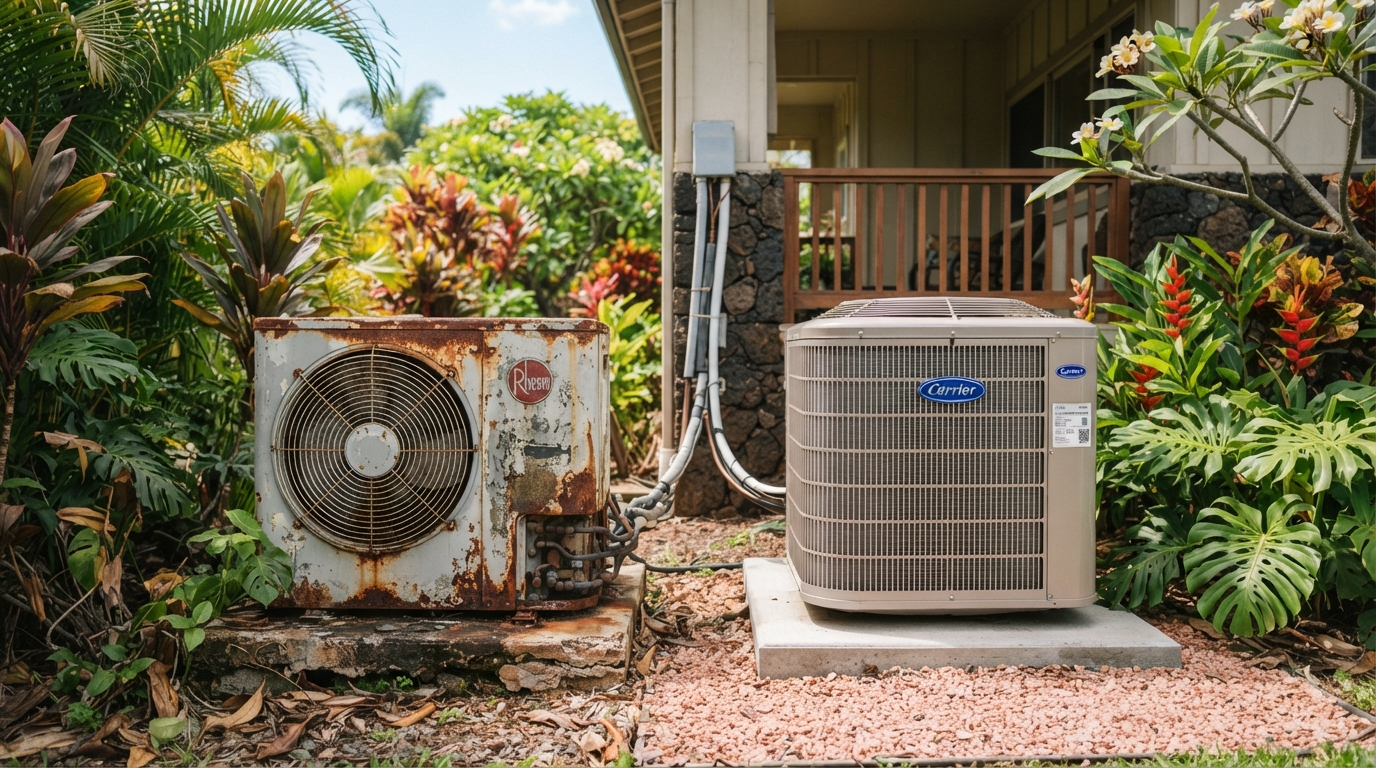
Three factors work against your AC in Hawaii: constant operation (systems run year-round with no winter break), salt air corrosion (especially within a mile of the coast), and high humidity (which stresses drain systems and encourages mold growth). These conditions accelerate wear on compressors, coils, electrical components, and drain lines.
How to Extend Your System's Life
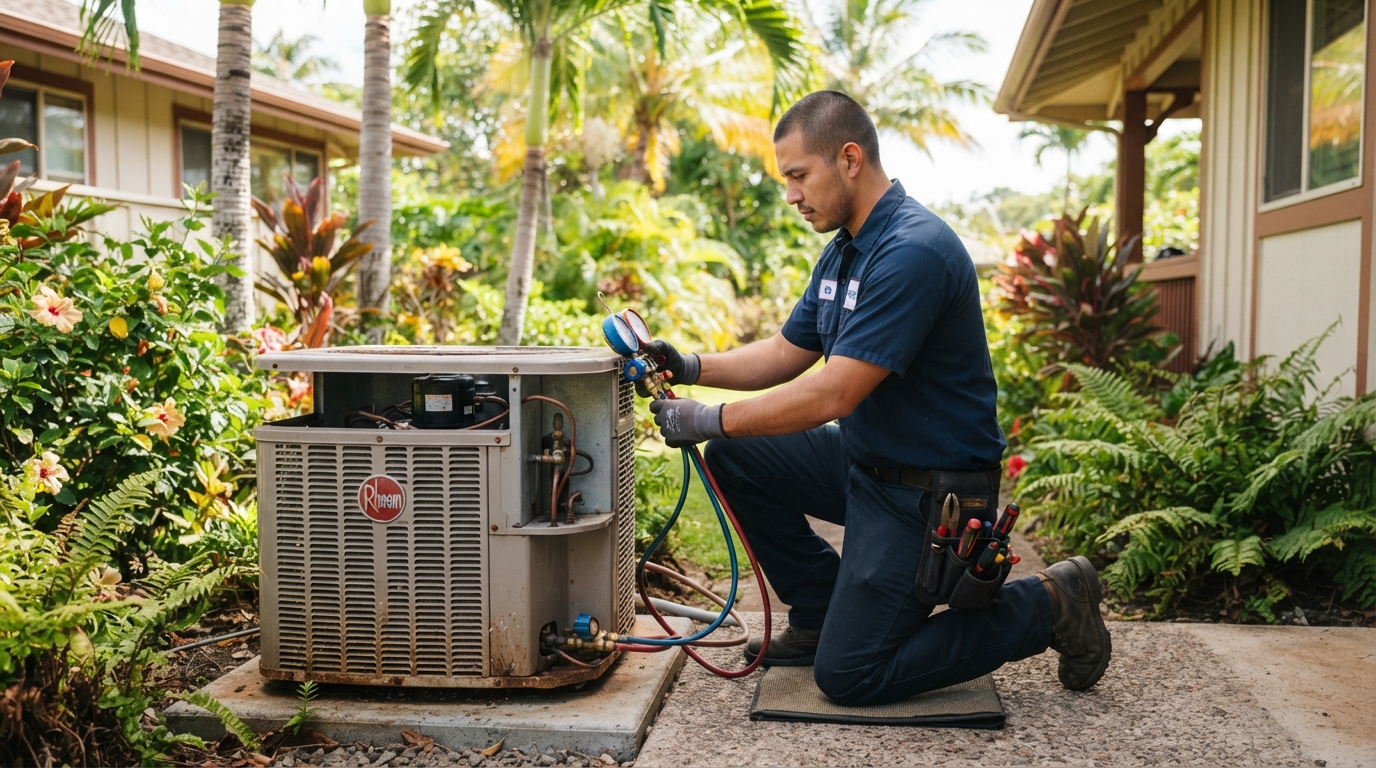
- Schedule professional maintenance twice a year—once is not enough in Hawaii's climate.
- Replace filters monthly during peak cooling season.
- Rinse the outdoor unit with fresh water every 2-4 weeks if you live near the coast.
- Keep the area around the outdoor unit clear of plants, debris, and structures.
- Address small problems immediately—a minor refrigerant leak or odd noise becomes a major failure if ignored.
When to Replace vs. Repair
If your system is over 10 years old, needs frequent repairs, or uses R-22 refrigerant (no longer manufactured), replacement is usually the better investment. A new high-efficiency system can cut your electricity bill significantly—on Oahu, the savings can offset the cost of replacement within a few years. If the system is under 8 years old and the repair is minor, repairing is usually more cost-effective.
Ready to Take Action?
Not sure whether to repair or replace? Our team can assess your system and help you make the right call for your home and budget.