Rooftop Unit Maintenance for Oahu Businesses: A Practical Guide
Rooftop HVAC units keep Oahu businesses running, but island conditions accelerate wear. Here's a maintenance guide for property managers and facility owners.
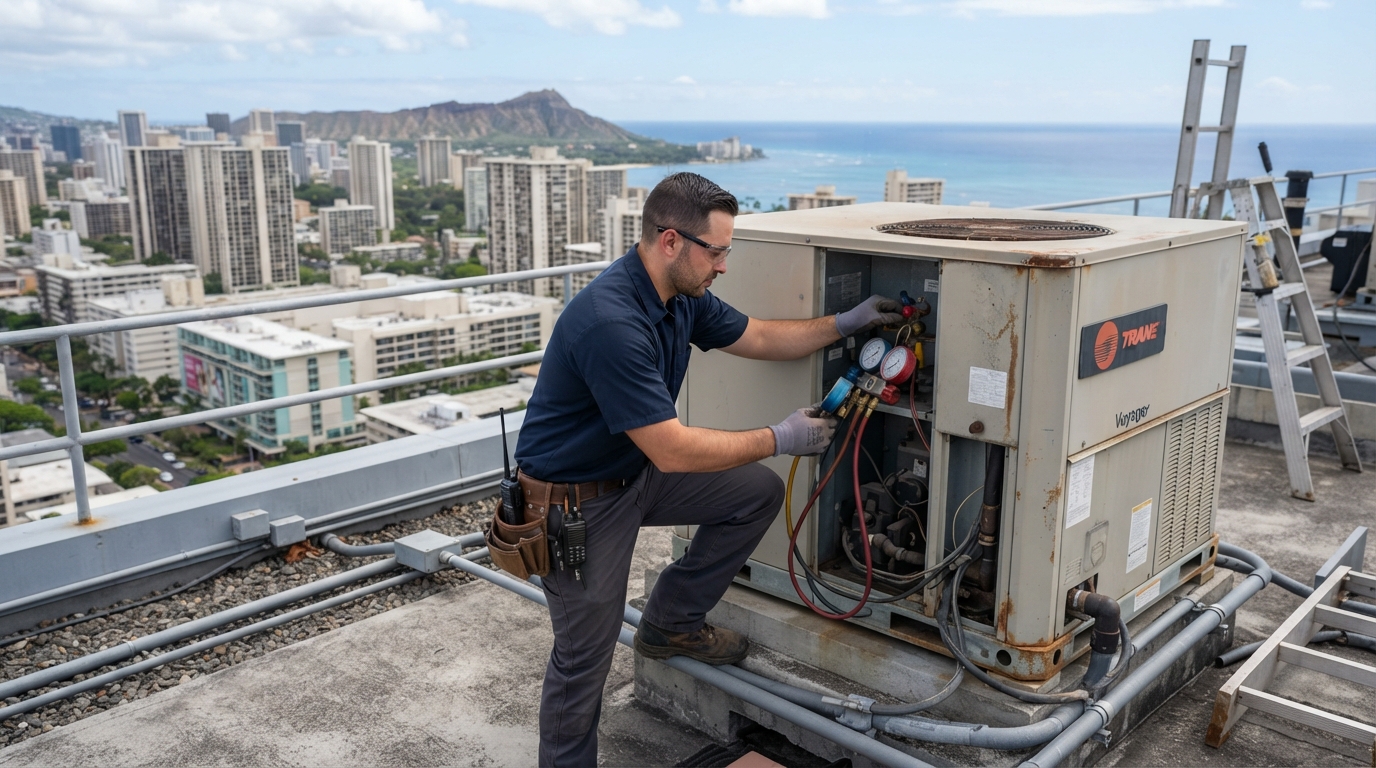
Rooftop packaged units (RTUs) are the workhorse of Oahu's commercial buildings—from restaurants in Honolulu to office parks in Pearl City and retail centers in Kapolei. They're efficient, compact, and handle both cooling and ventilation in one unit. But Hawaii's salt air, heat, and humidity accelerate wear significantly. Without a structured maintenance plan, RTUs fail faster and cost more to operate.
Why RTUs Fail Faster in Hawaii
Rooftop units are fully exposed to sun, rain, and salt-laden ocean air. Unlike ground-level systems, they have no shelter from the elements. Salt corrodes condenser coils and electrical components, UV degrades seals and wiring insulation, and constant cooling demand means compressors run nearly year-round. A mainland RTU might last 15-20 years; in Hawaii, 10-12 is more realistic without aggressive maintenance.
Essential Maintenance Tasks
- Coil cleaning: Schedule professional coil cleaning at least quarterly for coastal buildings, twice a year for inland. Dirty coils are the #1 cause of efficiency loss and compressor failure.
- Filter replacement: Commercial RTUs need monthly filter checks. High-occupancy buildings (restaurants, retail) may need biweekly changes.
- Drain pan and line inspection: Hawaii's humidity produces large amounts of condensate. Clogged drains cause water damage and system shutdowns.
- Electrical component inspection: Contactors, capacitors, and relays corrode faster in salt air. Inspect and replace before failure.
- Refrigerant level check: Low refrigerant indicates a leak. Running low on charge damages the compressor and reduces cooling capacity.
- Belt and blower inspection: Worn belts reduce airflow and can break without warning, shutting down cooling entirely.
The Case for a Maintenance Agreement
For commercial property managers, a structured maintenance agreement is the most cost-effective approach. It ensures regular, scheduled service rather than reactive repairs. Benefits include priority response for emergencies, predictable annual costs, documented service history for warranty and compliance, and longer equipment life. The cost of a maintenance plan is typically far less than the cost of emergency repairs and premature equipment replacement.
When to Plan for Replacement
If your RTUs are over 10 years old, start planning for replacement. Modern units offer significantly better efficiency (lower electricity bills on Oahu add up fast), improved corrosion resistance, and better controls integration. Staggering replacements across multiple units avoids a single large capital expense and prevents simultaneous failures.
Ready to Take Action?
Managing a commercial property on Oahu? Request a rooftop unit maintenance assessment and see how a structured agreement can reduce your operating costs.